

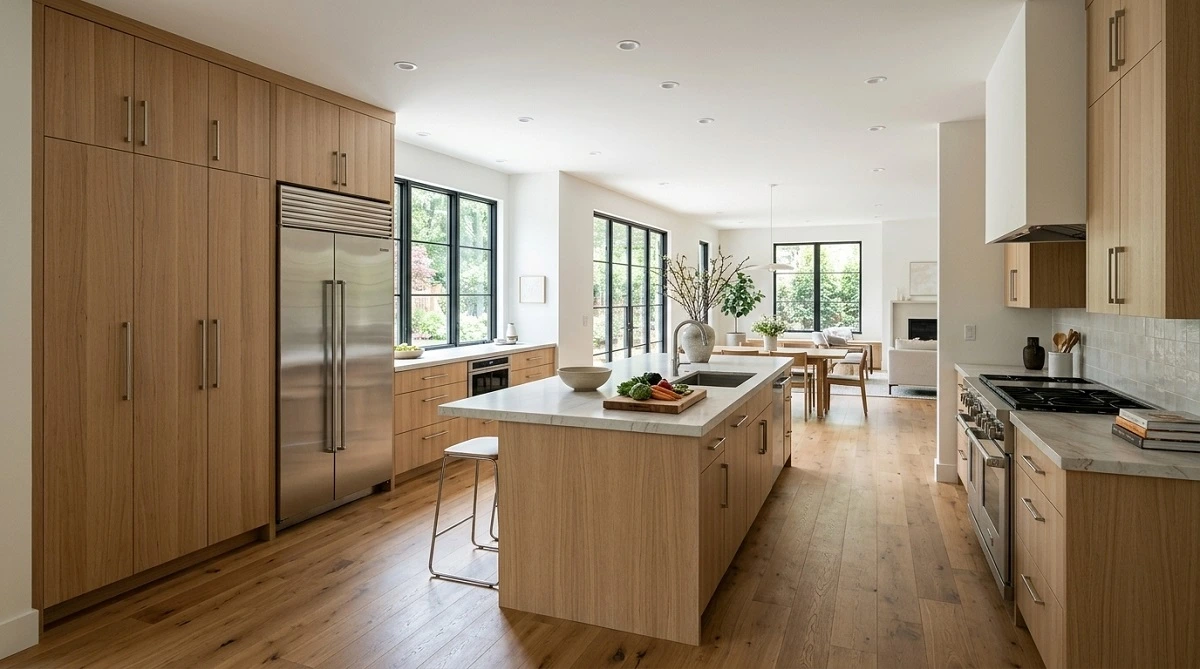
Kitchen cabinets are no longer just storage units placed around a refrigerator and stove. In modern American kitchens, they help define the room’s personality, control visual clutter, and make everyday activities easier. Their colors, door profiles, finishes, and internal layouts can change the entire appearance of a kitchen without requiring a completely different floor plan.
Recent kitchen designs show growing interest in natural wood, warm neutral colors, simple cabinet fronts, and storage that keeps appliances out of sight. Homeowners are also mixing materials rather than choosing one finish for every cabinet. These choices create kitchens that feel personal without looking overly decorated.
The most interesting Current Kitchen Cabinet Trends combine attractive surfaces with practical details. Here are seven styles shaping modern kitchens across the United States, along with ideas for using them in different types of homes.
1. Current Kitchen Cabinet Trends Bring Natural Wood Back Into Modern Kitchens
Natural wood cabinetry is gaining attention in American kitchen renovations. Instead of covering every cabinet with white paint, homeowners are choosing finishes that reveal the grain, knots, and natural color variations of wood.
White oak is especially popular in contemporary kitchens because its grain can look subtle and refined. Light maple and walnut also work well, depending on the desired appearance. Lighter woods suit bright, open kitchens, while medium walnut tones introduce more depth into larger spaces.
The appeal comes from the way wood interacts with other kitchen materials. A natural oak cabinet can sit comfortably beside a stone countertop, brushed metal hardware, or a simple tile backsplash.
Ways to use this style:
- Install natural oak cabinets along the main kitchen walls.
- Choose walnut for a kitchen island to introduce a darker focal point.
- Pair wood finishes with cream or soft beige countertops.
- Use a low-sheen protective finish to retain a natural appearance.
2. Two-Tone Kitchen Cabinets Create Contrast Without Overcrowding the Room
Using one cabinet color throughout the kitchen is no longer the only approach. Two-tone cabinetry gives homeowners an opportunity to combine different shades and materials while maintaining a coordinated appearance.
A common American kitchen arrangement uses lighter upper cabinets and darker lower cabinets. This keeps the upper part of the room visually open while giving the lower section more definition.
Another option is to use a contrasting design for the island and nearby cabinetry. For example, warm white cabinets can surround a deep olive-green island, or light oak cabinets can contrast with a charcoal island base.
The key is to choose finishes that complement one another instead of competing for attention.
Combinations worth trying:
- White oak upper cabinets with warm taupe lower cabinets.
- Cream perimeter cabinets with a dark walnut island.
- Soft sage cabinets with natural wood shelving.
- Light gray cabinets with a muted navy island.
This approach works particularly well in open-plan American homes where the kitchen remains visible from the dining and living areas. The contrasting island can help define the kitchen without adding a wall or physical divider.
3. Flat-Panel Cabinets Give Modern Kitchens a Cleaner Appearance
Flat-panel cabinets have a smooth front without raised borders, decorative frames, or traditional recessed details. Their simple appearance makes them a natural match for contemporary, minimalist, and Scandinavian-inspired kitchens.
These doors work particularly well in homes where the kitchen connects directly with a living or dining area. Instead of making the cabinetry look like a separate decorative feature, the smooth surfaces create a continuous visual line across the room.
Handleless designs take this idea further. Some use recessed channels, integrated finger pulls, or push-to-open mechanisms. Others retain slim bar handles for easier everyday use.
The finish matters just as much as the door shape. Matte white, warm gray, soft beige, and natural wood finishes can all work with flat-panel cabinetry.
Details that make this style work:
- Use consistent door dimensions across the main cabinet runs.
- Select understated hardware or integrated pulls.
- Continue tall cabinets toward the ceiling for a built-in appearance.
- Pair smooth cabinet fronts with textured flooring or stone surfaces.
Flat-panel doors also make cleaning straightforward because they have fewer decorative grooves where dust and cooking residue can collect.
4. Earthy Green and Warm Neutral Cabinets Replace Harsh Color Contrasts
Color is becoming more personal in kitchen design. Instead of relying entirely on bright white and cool gray, homeowners are exploring shades that feel softer and more connected with natural materials.
Sage, muted olive, eucalyptus, mushroom, sand, and warm taupe are useful choices for modern cabinetry. These colors introduce character without making the kitchen feel visually crowded.
Green cabinets work particularly well with natural wood, cream countertops, and brushed brass or bronze hardware. Mushroom and taupe offer a quieter appearance for homeowners who want something different from white without committing to a bold color.
Color placement is another important detail. A homeowner does not need to paint every cabinet green. An island, pantry wall, or lower cabinet section can introduce enough color to change the room’s appearance.
When selecting a shade, examine it under the kitchen’s actual lighting. A color that looks soft in a showroom may appear darker under warm pendant lights or different near large windows.
5. Reeded and Fluted Cabinet Fronts Add Texture to Simple Kitchen Designs
Smooth cabinet doors are not the only option for contemporary kitchens. Reeded and fluted surfaces introduce narrow vertical grooves that create depth and subtle shadows across cabinet fronts.
This style is especially useful when a kitchen has a restrained color palette. Instead of introducing several contrasting colors, homeowners can add visual interest through surface texture.
Fluted panels are often used on kitchen islands, decorative end panels, and selected cabinet sections. Using them throughout the entire kitchen can make the room feel too busy, particularly when the space is small.
Natural oak, walnut, painted beige, and dark brown finishes can all work with this detail. The vertical lines also complement modern pendant lighting, simple stone countertops, and clean architectural shapes.
Where to introduce texture:
- Use fluted wood panels on the island exterior.
- Add reeded details to a beverage cabinet.
- Choose textured cabinet fronts for a small display section.
- Keep surrounding doors smooth for a balanced finish.
The result is a kitchen that feels more detailed without depending on elaborate ornamentation.
6. Hidden Storage Cabinets Keep Countertops Clear and Organized
A beautiful kitchen can quickly lose its appeal when small appliances, food packages, cleaning supplies, and everyday accessories occupy every available surface.
This is one reason built-in storage has become an important part of modern kitchen planning. Instead of simply adding more cabinets, homeowners are choosing specialized interiors that make better use of existing space.
Appliance garages are a useful example. These enclosed cabinet sections can hold coffee machines, toasters, blenders, and other frequently used equipment. Some designs include pocket doors that slide or fold away during use.
Deep drawers are another practical choice. They make cookware, mixing bowls, and heavier kitchen items easier to access than traditional lower cabinets with fixed shelves.
Popular storage features include:
- Pull-out waste and recycling containers.
- Deep drawers with adjustable dividers.
- Vertical tray organizers for baking sheets.
- Pull-out spice racks near cooking areas.
- Corner cabinets with rotating or sliding shelves.
- Built-in pantry sections with adjustable storage.
For smaller kitchens, these features can make a noticeable difference without requiring additional square footage.
7. Glass-Front and Integrated Cabinets Bring Display and Function Together
Not every kitchen item needs to remain hidden. Glass-front cabinets offer a way to display attractive dinnerware, glassware, serving pieces, and selected accessories while maintaining an organized appearance.
Modern designs often use clear, ribbed, or lightly tinted glass. Slim metal frames can give these cabinet sections a contemporary look, while interior lighting makes the contents visible after dark.
The most successful arrangements use glass doors selectively. A single display cabinet near the dining area or a small section above a beverage station can create interest without exposing every shelf.
Integrated appliance cabinetry follows a related design approach. Refrigerators and dishwashers can sit behind matching cabinet panels, making them blend into the surrounding design. This creates a continuous appearance, especially in open-plan kitchens where appliances might otherwise interrupt the cabinetry.
Ideas for combining display and integrated storage:
- Add a glass-front cabinet above a coffee station.
- Use interior lighting to illuminate selected shelves.
- Choose dark bronze or black metal frames for contrast.
- Match refrigerator panels with nearby tall cabinets.
- Keep everyday supplies in closed cabinets and reserve glass sections for display pieces.
These details help the kitchen feel more coordinated while keeping frequently used items accessible.
Choosing the Right Current Kitchen Cabinet Trends for Your Home
A popular cabinet style does not automatically suit every kitchen. The available space, natural light, ceiling height, household routines, and existing materials all influence the final result.
For example, natural wood can bring warmth to a large open kitchen, while flat-panel cabinets may suit a smaller room where simple surfaces help maintain a clean appearance. A colored island can introduce contrast without requiring a complete cabinet replacement.
It is also worth thinking about long-term use. Cabinet doors, drawer mechanisms, finishes, and internal organizers experience daily activity. Select materials that can handle regular cleaning and the demands of cooking.
| Cabinet style | Suitable kitchen setting | Main design benefit |
| Natural wood | Open and contemporary kitchens | Warmth and visible grain |
| Two-tone cabinets | Medium and large kitchens | Color contrast |
| Flat-panel doors | Minimalist and small kitchens | Clean visual lines |
| Earthy colors | Modern and transitional kitchens | Soft, natural character |
| Reeded fronts | Islands and feature sections | Added surface texture |
| Hidden storage | Busy family kitchens | Less countertop clutter |
| Glass-front cabinets | Display and beverage areas | Visual depth and display |
Homeowners collecting Home decor Ideas can also look at how cabinet finishes connect with flooring, wall colors, lighting, and furniture in nearby living spaces. This is particularly useful in American open-plan layouts where several rooms share one visual setting.
Final Thoughts
Modern kitchen cabinetry is moving beyond the idea that every cabinet should match and every appliance should remain visible. Natural wood, two-tone finishes, textured panels, earthy colors, and specialized storage are giving homeowners more ways to shape kitchens around their daily routines.
The most successful Current Kitchen Cabinet Trends are not necessarily the boldest designs. They are the ones that make the kitchen feel comfortable, organized, and connected with the rest of the house.
A natural wood island, a concealed appliance station, or a carefully selected cabinet color can change the room without making every surface compete for attention. Start with the features that suit your space, then build a coordinated design around them.