

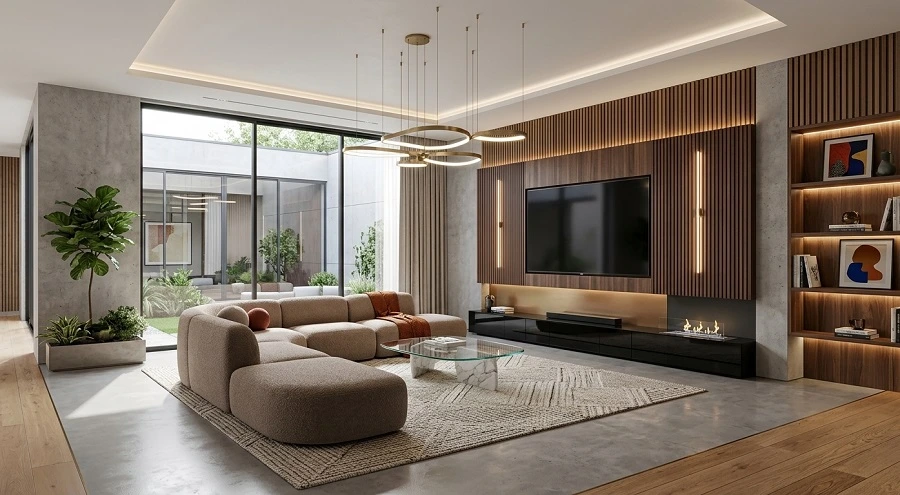
Modern home design does not have to feel like a showroom. In fact, a room can feel more comfortable when it has a little personality, a few imperfect details, and enough empty space around the things you actually use.
A well-planned house interior usually has a quiet sense of order. The colors relate to each other, furniture fits the room, lighting feels comfortable, and decorative pieces do not compete for attention.
That balance is what makes a home feel finished without making it feel overly styled.
What Makes a House Interior Look Modern?
Modern style is often associated with clean lines and simple furniture, but there is more to it than that. A modern room works because its different parts have a clear relationship.
A wooden table can sit comfortably beside a soft sofa. A dark lamp can connect with a picture frame across the room. A neutral wall can make colorful artwork stand out.
Nothing has to match perfectly.
How Much Decoration Is Enough?
A common mistake is filling every empty surface because an undecorated area can feel unfinished. Yet empty space is useful in interior design.
A clear section of wall can make artwork more noticeable. An uncluttered table can make a lamp or vase feel more important.
Instead of asking what else you can add, ask what the room actually needs. That simple shift in perspective can make decorating decisions easier.
Why Does Balance Matter in a Home?
Imagine placing a large, dark sofa on one side of a room and leaving the other side almost completely empty. Even if every individual item looks good, the room may still feel uneven.
Balance distributes visual weight around the space.
This does not mean buying matching furniture. A large plant, wooden cabinet, floor lamp, or artwork can balance a substantial piece of furniture without looking identical.
What Are the Different Ways to Create Balance?
Symmetry is the easiest approach. Two similar lamps beside a bed, for example, create an immediate sense of order.
Asymmetrical balance can feel more relaxed. A large chair on one side of a room might be balanced with a smaller chair and floor lamp on the other.
The important part is how much visual attention each area receives.
How Can Color Make a House Interior Feel Connected?
Color is one of the simplest ways to connect separate rooms.
That does not mean painting every wall the same shade. Instead, use a few colors that can be repeated in different areas of the home.
For example, warm beige might appear on a living room wall, while a similar tone shows up in bedroom curtains. A muted green used in the kitchen could return through plants or artwork elsewhere.
Which Color System Is Easy to Work With?
A three-part color approach can keep things simple:
- Main color: Covers wide areas and forms the foundation of the design.
- Supporting color: Appears in furniture, textiles, or larger decorative pieces.
- Accent color: Adds small bursts of contrast.
This method gives you room to experiment without creating a collection of unrelated colors.
What Role Does Furniture Have in Modern Interior Design?
Furniture can make a room feel more open or more crowded.
Before choosing a sofa, bed, dining table, or cabinet, look at the available floor space. There should be enough space for people to walk around comfortably.
A beautiful chair that blocks a doorway may still be a poor choice for the room.
How Can Furniture Placement Improve a Room?
Start with how you use the space.
A living room should make conversation easy. A bedroom should have enough comfortable space around the bed. A dining area should allow chairs to move without hitting nearby furniture.
There is also no rule saying every piece needs to sit against a wall. Pulling a sofa slightly away from the wall can sometimes create a better seating area and make the room feel more intentional.
Why Is Lighting So Important?
Lighting changes how colors, textures, and furniture appear.
A room with only one bright ceiling light can feel flat. A room with several softer sources can feel warmer and more layered.
For a modern interior, think about lighting at different heights. Ceiling lights handle general brightness, while table lamps, floor lamps, and wall lights can create smaller pools of light.
How Can Natural Light Improve the Design?
Natural light can make neutral colors appear brighter and textures easier to notice.
Keep windows as visually open as possible. Heavy furniture directly beside a window can reduce the sense of openness.
Light curtains can soften strong sunlight while still allowing the room to benefit from daylight.
Can Texture Make a Modern Room Feel Warmer?
Absolutely. This is one area where modern interiors can easily go wrong.
If every surface is smooth, hard, and glossy, the room may look polished but feel uncomfortable.
Texture gives the eye something else to notice.
Think about a soft rug under a wooden coffee table, linen curtains beside a painted wall, or a woven basket near a smooth cabinet. These small contrasts make a room feel more lived-in.
How Can Different Rooms Feel Like One Home?
Every room can have its own furniture style.
A bedroom can feel softer and calmer than a living room. Your kitchen can have stronger contrast. Your bathroom can be more minimal.
What matters is having a few repeated details that quietly connect the spaces.
| Design Element | How It Can Repeat | What It Adds |
|---|---|---|
| Color | Walls, cushions, artwork | Visual connection |
| Wood | Furniture, shelves, accents | Warmth |
| Metal finish | Lighting, handles, frames | Consistency |
| Texture | Rugs, curtains, baskets | Depth |
| Shapes | Curved or straight forms | Design character |
Think of these repeated elements as threads running through the home. They do not need to be obvious.
What Makes an Interior Feel Personal?
A home becomes interesting when it contains things that could not have come straight out of a furniture catalogue.
Maybe it is an old wooden chair that has been in the family for years. Maybe it is a photograph, a painting picked up during a trip, or a collection of books that actually gets read.
These accents can differ from your furniture.
Sometimes the one object that looks slightly different is the thing that gives the room its character.
How Can You Avoid Making Everything Match?
Matching furniture can give a room a consistent look, but too much of it can make the space feel repetitive.
Try mixing related styles instead.
A modern sofa can pair well with a vintage side table. A clean-lined dining table can sit beside chairs with a softer shape. A contemporary bedroom can include a traditional wooden chest.
The goal is not to make every item look like part of the same collection.
The goal is to make the overall combination feel intentional.
Where Should Decorative Pieces Go?
Decorations usually have more impact when they are grouped rather than scattered everywhere.
A shelf with five unrelated objects can look messy. Three connected pieces with different heights can look much more deliberate.
The same idea works on coffee tables, consoles, bedside tables, and open shelving.
What Details Can Add Character?
You can use:
- Artwork
- Books
- Plants
- Ceramic pieces
- Mirrors
- Decorative bowls
- Textured fabrics
Choose pieces that relate to the room’s colors and materials, but do not worry about making everything identical.
Can Plants Improve Modern Interior Design?
Plants bring a different kind of texture into a room. Their irregular shapes can soften furniture with straight edges.
A tall plant can fill an unused corner, while a smaller plant can sit on a shelf or side table.
The important thing is scale. A tiny plant may disappear beside a large sofa, while an oversized plant can overwhelm a small room.
Choose greenery that suits the available light and the amount of care you can manage.
What Should You Do When a Room Feels Unbalanced?
Before buying anything new, remove something.
It sounds simple, but it often works.
Take a few decorative objects off a crowded shelf. Move a chair away from a tight corner. Clear part of a countertop. Then look at the room again.
If one side still feels visually heavy, add something to the quieter side rather than filling the entire room.
Sometimes the missing ingredient in a room is not another decoration. It is breathing space.
How Can You Refresh an Existing Interior?
You do not have to replace every piece of furniture for a new look.
Changing the position of furniture can alter the way a room functions. A new rug can define a seating area. Different curtains can change the amount of visual softness. New lighting can make familiar furniture look completely different.
You can also introduce one stronger element, such as a large artwork piece or a textured chair, while keeping the rest of the room relatively simple.
Why Does Consistency Matter More Than Matching?
There is an important difference between a home that matches and a home that feels connected.
Matching means many things look alike.
Consistency means different things work well together.
A blue bedroom, beige living room, and green kitchen can still belong to the same home when they share certain materials, finishes, shapes, or small accent colors.
This gives each room freedom while keeping the overall interior coherent.
What Is the Simple Rule for a Balanced Home?
Look at the room as a whole before judging individual pieces.
A sofa may look too large on its own but feel right once a large rug and substantial coffee table balance it. A plain wall may look empty until artwork and lighting are added.
Interior design is really about relationships.
Color relates to furniture. Furniture relates to space. Lighting changes color. Texture affects how materials feel. Accessories add personality.
When those relationships make sense, the room usually feels right without needing excessive decoration.
Final Thoughts
A modern house interior does not need to follow a strict formula. It needs a sense of proportion, a thoughtful color story, comfortable furniture placement, useful lighting, and enough personality that the home still feels lived in.
Good modern interior design leaves room for both order and character. Some areas can be simple, while others can carry more visual interest.
Start with what already works in your home. Keep the pieces that have meaning, remove what creates clutter, and introduce new elements only when they solve a real design problem.
The result should not feel like a perfect display. It should feel like a home where everything has a place, but nothing has to behave perfectly.
For readers interested in sharing practical renovation and decorating knowledge, write for us for home improvement can be a relevant opportunity for contributing useful home-focused content.
Modern Decor Trend keeps the conversation around home design practical, approachable, and centered on ideas people can actually use.